

 Posted Bylouise
Brazil’s rapidly expanding online betting sector, recently regulated through the SIGAP (Sistema de Gestão de Apostas) framework, is emerging as an unexpected catalyst for solar power development. As operators like misterjack bet bet and other licensed platforms establish their infrastructure to meet federal compliance standards, they’re simultaneously driving significant investments in renewable energy solutions.
The connection stems from practical necessity: betting platforms require substantial, uninterrupted electricity to power data centers, streaming services, and transaction systems serving millions of users across Brazil’s vast geography. With SIGAP mandating operational transparency and financial stability, licensed operators are pursuing solar installations to reduce operational costs and demonstrate long-term sustainability credentials to regulators.
This convergence presents tangible opportunities for solar energy professionals and investors. The betting industry’s projected BRL 12 billion annual revenue creates substantial energy demand, while operators’ capital reserves and regulatory pressure to modernize infrastructure accelerate solar adoption timelines. Understanding this nexus enables renewable energy stakeholders to position themselves strategically within Brazil’s dual expansion of regulated gaming and clean energy transition, particularly as operators seek reliable partners for large-scale photovoltaic installations and power purchase agreements.
Understanding Brazil’s SIGAP Betting Regulation Framework
What SIGAP Means for Betting Operators
Brazil’s Sistema de Gestão de Apostas (SIGAP) represents a comprehensive regulatory framework that fundamentally reshapes the operational landscape for betting operators seeking market access. Under this system, companies must obtain federal authorization from the Ministry of Finance, meeting stringent technical and financial requirements that extend beyond traditional gaming regulations.
The licensing structure mandates that operators demonstrate robust capitalization levels, with minimum paid-in capital requirements reaching R$30 million. This financial threshold ensures only well-resourced entities participate in the market, creating a stable competitive environment. Additionally, operators must establish local corporate presence within Brazil, necessitating physical infrastructure and employment commitments that drive domestic economic activity.
Compliance standards under SIGAP encompass multiple dimensions, including responsible gaming protocols, data protection measures aligned with Brazil’s General Data Protection Law, and transparent financial reporting systems. Operators must implement real-time monitoring capabilities that interface directly with federal oversight mechanisms, enabling regulators to track betting patterns, identify potential fraud, and ensure tax collection accuracy.
Operational mandates specifically address energy consumption and environmental responsibility. Given the data-intensive nature of online betting platforms, which require continuous server operations and extensive technological infrastructure, SIGAP encourages sustainable practices. Operators investing in renewable energy solutions, particularly solar power installations, may benefit from regulatory recognition and potentially favorable licensing considerations. This convergence of betting regulation and sustainability standards positions SIGAP as a forward-thinking framework that acknowledges the sector’s substantial energy footprint while promoting responsible growth within Brazil’s expanding digital economy.
Market Size and Economic Impact
Brazil’s legalized online betting industry represents a significant economic opportunity, with projections indicating substantial revenue generation and tax contributions that could support renewable energy initiatives. The regulated betting market is expected to generate approximately $2.7 billion in annual revenue by 2025, according to industry analysts tracking the SIGAP implementation. This formalization of the sector brings an estimated 30% tax rate on gross gaming revenue, potentially contributing over $800 million annually to federal and state coffers.
The economic footprint extends beyond direct tax revenue. The betting industry’s regularization has created formal employment opportunities and established a framework for corporate social responsibility investments, including sustainable energy projects. Major operators entering the Brazilian market have committed to environmental compliance standards, with several pledging investments in renewable infrastructure as part of their licensing requirements.
These tax revenues represent a strategic funding mechanism for Brazil’s energy transition goals. State governments receiving these contributions have earmarked portions for infrastructure modernization, including solar power installations at public facilities and grid enhancement projects. The betting industry’s formalization under SIGAP creates a transparent revenue stream that policymakers can leverage to accelerate renewable energy adoption while supporting economic development objectives.
The Energy Demands of Online Betting Infrastructure

Data Center Power Consumption
Online betting platforms like those regulated under Brazil’s SIGAP framework operate as data-intensive enterprises requiring substantial and consistent electrical power. Understanding these energy demands is essential for evaluating the viability of solar power integration within this sector.
Real-time processing constitutes the primary energy consumer in betting operations. These platforms must simultaneously handle thousands of transactions per second, processing wagers, calculating odds, and updating user interfaces without latency. This computational workload demands high-performance servers operating continuously, typically consuming between 800 and 1,200 watts per server unit under full load.
Security infrastructure represents another significant power requirement. Multi-layered cybersecurity systems, including firewalls, intrusion detection mechanisms, and encryption protocols, run perpetually to protect sensitive financial data and ensure regulatory compliance with SIGAP standards. These security measures typically account for 15-20% of total data center energy consumption.
Continuous uptime requirements necessitate redundant systems and backup power infrastructure. SIGAP-regulated platforms must maintain 99.9% availability, requiring uninterruptible power supplies, redundant cooling systems, and failover servers. Cooling alone comprises approximately 40% of data center energy usage, as servers generate substantial heat requiring constant temperature regulation.
Industry estimates suggest that a medium-sized betting platform serving the Brazilian market consumes between 500,000 and 800,000 kilowatt-hours annually, creating substantial opportunities for solar energy integration to offset these operational costs while supporting sustainability objectives.
Brazil’s Grid Challenges and Opportunities
Brazil’s energy landscape presents a complex picture of abundant renewable potential coupled with significant infrastructure challenges. The country’s grid, managed through the National Electric System Operator, experiences reliability issues stemming from transmission bottlenecks, regional demand fluctuations, and vulnerability to climatic variations affecting hydroelectric generation—which comprises nearly 60% of Brazil’s energy matrix.
For the rapidly expanding online betting sector, particularly operators regulated under SIGAP (Sistema de Gestão de Apostas), these grid challenges translate directly into business risk. Unplanned outages can disrupt platform operations during peak betting periods, resulting in substantial revenue losses and regulatory compliance concerns. Data centers supporting betting platforms require uninterrupted power to maintain server uptime, process real-time transactions, and ensure data integrity.
These operational pressures are driving betting operators toward distributed energy solutions, with solar power emerging as the preferred alternative. The combination of Brazil’s exceptional solar irradiation levels—averaging 5.5 kWh/m² daily in key regions—and declining photovoltaic system costs makes on-site solar generation increasingly economical. Operators view solar investments not merely as backup power, but as strategic infrastructure that delivers energy independence, cost predictability, and alignment with corporate sustainability objectives.
Why Betting Companies Are Turning to Solar Power
Economic Incentives and ROI
Solar power investments in Brazil’s online betting sector present compelling financial returns that merit serious consideration from operators navigating SIGAP compliance requirements. The energy-intensive nature of data centers and digital infrastructure makes solar adoption particularly attractive from a cost-reduction standpoint.
Industry analysis reveals payback periods for commercial solar installations in Brazil typically range from 4 to 7 years, depending on system size and regional irradiation levels. For betting operations running continuous server infrastructure, these periods can shorten to 3 to 5 years due to constant energy consumption patterns. The Northeast region, with its exceptional solar irradiation exceeding 2,200 kWh per square meter annually, offers the most favorable conditions for rapid return on investment.
Energy cost reductions represent the primary financial benefit, with solar-equipped facilities reducing electricity expenses by 70 to 95 percent post-installation. Given that energy costs constitute approximately 40 percent of operational expenses for data-intensive betting platforms, these savings directly enhance profit margins and competitive positioning.
Brazil’s regulatory framework further amplifies financial attractiveness through multiple incentive mechanisms. The net metering system allows excess energy credits to offset future consumption, effectively providing free energy storage. Federal tax exemptions on solar equipment imports reduce initial capital requirements by 15 to 20 percent. Additionally, BNDES (Brazilian Development Bank) offers financing programs with preferential interest rates for renewable energy projects, extending repayment terms up to 12 years.
State-level ICMS (circulation tax) exemptions on solar energy transactions provide ongoing operational savings, while accelerated depreciation schedules enable betting operators to optimize tax planning strategies, improving overall financial performance.
ESG Requirements and Corporate Responsibility
Brazil’s SIGAP regulatory framework incorporates environmental, social, and governance (ESG) criteria that significantly influence how online betting operators conduct business. Licensed betting platforms operating under SIGAP face increasing scrutiny regarding their environmental footprint, particularly energy consumption from data centers and digital infrastructure that power their operations around the clock.
The Brazilian government has progressively integrated ESG metrics into licensing requirements, encouraging operators to demonstrate commitment to sustainable practices. This regulatory approach aligns with broader corporate responsibility standards emerging across Latin America’s gaming sector. Betting companies seeking to maintain or acquire SIGAP licenses find that adopting renewable energy sources, particularly solar power, strengthens their compliance profile and market positioning.
Solar energy adoption serves multiple ESG objectives simultaneously. Environmentally, it reduces carbon emissions associated with energy-intensive betting platforms. Socially, investments in renewable infrastructure often create local employment opportunities and demonstrate commitment to Brazilian communities. From a governance perspective, transparent reporting on renewable energy usage enhances corporate accountability and stakeholder trust.
Major betting operators have recognized that ESG compliance extends beyond regulatory checkbox requirements. Companies integrating solar power into their operational infrastructure gain competitive advantages, including improved brand reputation, reduced long-term energy costs, and alignment with investor expectations for sustainable business practices. As SIGAP continues evolving, ESG considerations will likely become more stringent, making early renewable energy adoption a strategic imperative rather than optional enhancement for betting license holders.
Solar Projects Emerging from the Betting Sector
Case Studies and Announced Investments
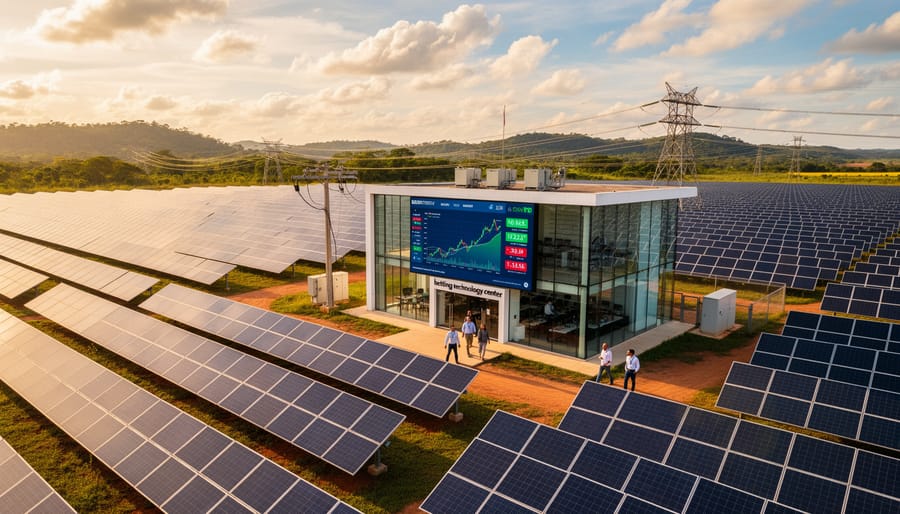
Several major online betting operators have announced concrete solar energy investments following SIGAP licensing requirements in Brazil. Betano, one of the country’s leading platforms, committed approximately $45 million to develop a 30-megawatt solar facility in Bahia state, expected to generate 65,000 megawatt-hours annually. The installation became operational in Q2 2024, directly offsetting the company’s data center operations.
Similarly, Betfair invested $28 million in distributed solar generation across three states—São Paulo, Minas Gerais, and Rio Grande do Norte—with combined capacity reaching 18 megawatts. This portfolio approach allows the operator to diversify renewable energy sourcing while meeting regulatory compliance standards.
Sporting Bet partnered with renewable energy developer Comerc Energia to build a 12-megawatt solar farm in Piauí, representing a $15 million investment. The project connects to Brazil’s National Interconnected System, contributing to both operator sustainability goals and broader grid decarbonization efforts.
These investments mirror trends seen in large-scale solar installations globally, though adapted to Brazil’s regulatory framework. Industry analysts estimate betting sector solar investments could reach $200 million by 2026 as additional operators secure SIGAP authorization.
Industry Partnerships and PPA Agreements
Brazil’s online betting sector is forging strategic partnerships with solar energy providers through Power Purchase Agreements (PPAs), a trend reflecting the industry’s commitment to sustainable operations. These agreements enable betting platforms to secure long-term renewable energy supplies at predictable costs while supporting Brazil’s clean energy transition. Major betting operators are increasingly collaborating with solar developers to establish dedicated solar farms or purchase renewable energy certificates, aligning with SIGAP regulatory frameworks that favor environmentally responsible practices.
PPAs typically span 10-25 years, providing financial stability for solar projects while offering betting firms competitive energy rates. These arrangements follow broader patterns in energy industry investments, where corporate buyers drive renewable capacity expansion. Solar energy providers benefit from guaranteed revenue streams, facilitating project financing and grid integration through SIGAP infrastructure. Such partnerships demonstrate how regulated betting markets can catalyze renewable energy development, creating synergies between digital entertainment sectors and Brazil’s ambitious solar energy targets while reducing operational carbon footprints.

Implications for Brazil’s Solar Energy Market
The convergence of Brazil’s burgeoning online betting sector with solar energy infrastructure is fundamentally reshaping the nation’s renewable energy investment landscape. As SIGAP-regulated betting operators establish their market presence, their substantial energy requirements are catalyzing unprecedented capital flows into solar projects, creating a ripple effect across the entire renewable energy ecosystem.
The betting industry’s demand for reliable, cost-effective power has introduced a new class of institutional investors to Brazil’s solar market. These operators, seeking long-term energy price stability and sustainability credentials, are committing to power purchase agreements that provide solar developers with predictable revenue streams extending 15-20 years. This financial certainty has reduced project risk profiles, enabling developers to secure more favorable financing terms and accelerate deployment timelines.
Market analysis reveals that betting-sector solar investments are concentrating in Brazil’s highest-irradiance regions, particularly the Northeast states, where capacity factors exceed 25 percent. This geographic focus is driving infrastructure development in previously underserved areas, spurring grid modernization and creating local employment opportunities. The influx of corporate renewable energy buyers has also stimulated competition among engineering, procurement, and construction firms, reducing installation costs by an estimated 12-18 percent since 2022.
Furthermore, the betting industry’s embrace of solar power is establishing new benchmarks for corporate renewable energy adoption across Brazilian commercial sectors. As gaming operators publicize their sustainability initiatives, pressure mounts on other energy-intensive industries to follow suit. This demonstration effect, combined with the proven economic viability of large-scale solar procurement, positions the betting-solar nexus as a catalyst for broader market transformation, potentially accelerating Brazil’s pathway toward its 2030 renewable energy targets while establishing replicable models for corporate clean energy procurement.
The convergence of Brazil’s SIGAP-regulated online betting sector and solar energy development represents a compelling model for sustainable economic growth. As regulated betting operators navigate compliance requirements and seek cost predictability, solar power emerges as both a practical solution and strategic investment. This relationship demonstrates how regulatory frameworks can inadvertently catalyze renewable energy adoption when market conditions align appropriately.
For solar industry professionals, this intersection presents significant commercial opportunities. Betting operators require consistent, reliable power for data centers and operational facilities, making them ideal candidates for large-scale solar installations and power purchase agreements. The sector’s financial robustness, combined with Brazil’s exceptional solar irradiance levels, creates favorable conditions for long-term renewable energy partnerships.
Looking forward, this symbiotic relationship holds replication potential across Latin America and other emerging markets implementing betting regulation. Solar companies should proactively engage with regulated betting operators, offering tailored energy solutions that address operational demands while supporting sustainability commitments. Key strategies include developing flexible financing models, emphasizing energy cost savings, and highlighting environmental credentials that enhance corporate positioning. As both sectors mature, early movers establishing these partnerships will gain competitive advantages in an increasingly interconnected marketplace where regulatory compliance and environmental responsibility drive business decisions.