

 Posted Bylouise
Assessing clean energy supply chain risks requires identifying geographic concentration points, evaluating geopolitical exposure, and quantifying alternative sourcing options for critical minerals. The International Energy Agency’s Global Critical Minerals Outlook 2026, released in July, confirms that critical minerals have shifted to the center of energy, economic, and national security agendas worldwide. The agency emphasizes stronger action to secure supply chains as risks continue growing, particularly as solar and wind potentials expand globally and place unprecedented demand on lithium, copper, nickel, cobalt, graphite, and rare earth elements.
The challenge isn’t theoretical. The 2024 outlook documented how heavily concentrated supply chains and insufficient production capacity to meet anticipated future demand could constrain clean energy transitions over the long term, even as global critical mineral prices fell across the board in 2023. For industry professionals managing procurement and project timelines, understanding these vulnerabilities translates directly into competitive advantage and operational resilience. This systematic approach provides the framework to identify your specific exposure points, quantify risks using available IEA data and analytical tools, and implement mitigation strategies that protect project schedules and budgets against supply disruptions.
Understanding the Resources and Data Needed to Evaluate Supply Chain Risks
Assessing critical mineral vulnerabilities starts with gathering the right intelligence. The IEA’s Global Critical Minerals Outlook series provides the authoritative baseline. The 2026 edition, released in July 2026, flags how critical minerals have surged to the forefront of energy, economic, and national security agendas worldwide. The earlier 2024 edition documented a sharp drop in global critical mineral prices throughout 2023, while simultaneously warning that concentrated supply chains and insufficient production capacity could constrain clean energy ambitions over the long term. Both reports map current market trends for lithium, copper, nickel, cobalt, graphite, and rare earth elements, the minerals powering solar panels, batteries, and grid infrastructure.
Beyond these flagship reports, effective risk assessment requires layering in real-time market data and concentration metrics. The IEA outlook details mineral constraints that emerge when a handful of countries or companies control extraction, refining, or processing. Your analytical toolkit should include:
- IEA Global Critical Minerals Outlook reports (2024 and 2026 editions) for trend analysis and policy context
- Mineral price indices tracking lithium, copper, nickel, cobalt, graphite, and rare earths
- Supply concentration data showing geographic and corporate control of production
- Demand forecasts tied to clean energy deployment scenarios
- Production capacity assessments identifying expansion timelines and investment gaps
This combination lets you cross-reference what the IEA identifies as systemic risks against your specific exposure. Prices alone don’t reveal the full picture, low prices in 2023 masked structural vulnerabilities that persist. Track how much of a given mineral comes from a single country or region, which refining facilities handle the majority of processing, and whether planned capacity expansions match projected demand. Without these layers, you’re flying blind when supply disruptions hit.
Critical Risk Indicators and Warning Signs
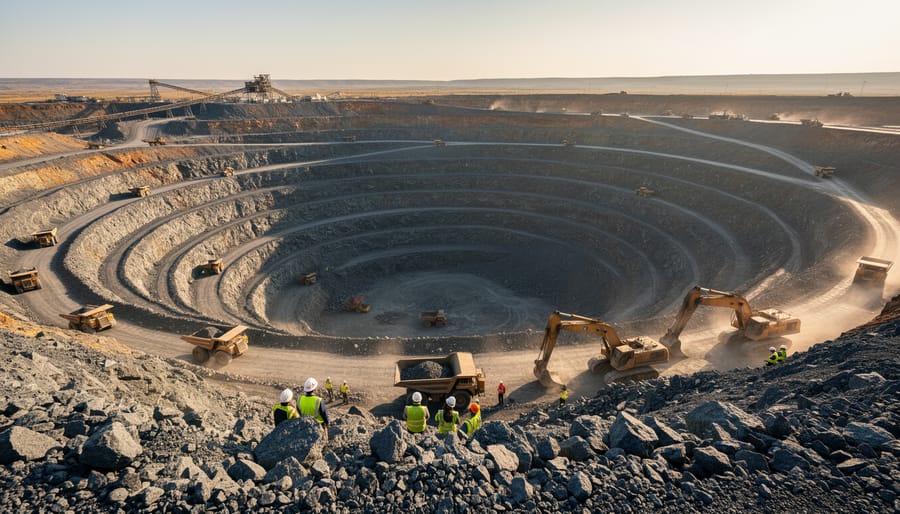
The IEA’s analysis reveals several critical warning signs that demand immediate attention from clean energy supply chain managers. Recognizing these indicators early allows you to take action before vulnerabilities threaten your operations.
The most significant red flag is geographic concentration. When supply chains are heavily concentrated in a single country or region, any disruption, whether political instability, trade restrictions, or natural disasters, can cascade across the entire global market. For lithium, cobalt, and rare earth elements, production and processing remain dominated by just two or three nations, creating acute dependency risks that leave clean energy projects exposed.
The 2024 outlook identified a deceptive market signal that many misread: critical mineral prices fell in 2023 across lithium, nickel, cobalt, and graphite. On the surface, lower prices suggest abundant supply and reduced risk. In reality, this price drop reflects temporary oversupply from recent capacity additions, not long-term security. The falling prices mask a fundamental mismatch between projected demand growth and planned production capacity. When demand accelerates in the late 2020s, today’s excess inventory will evaporate quickly, and the underlying supply constraints will reemerge with force.
Watch for investment gaps as another critical indicator. When mining and processing projects fail to advance beyond feasibility studies, or when capital flows decline despite rising long-term demand forecasts, it signals that the industry is not building the capacity needed for the clean energy transition. The IEA’s 2026 outlook emphasizes that critical minerals have moved to the forefront of countries’ energy, economic, and national security agendas precisely because these gaps threaten both climate goals and geopolitical stability.
Step-by-Step Process for Analyzing Your Supply Chain Exposure
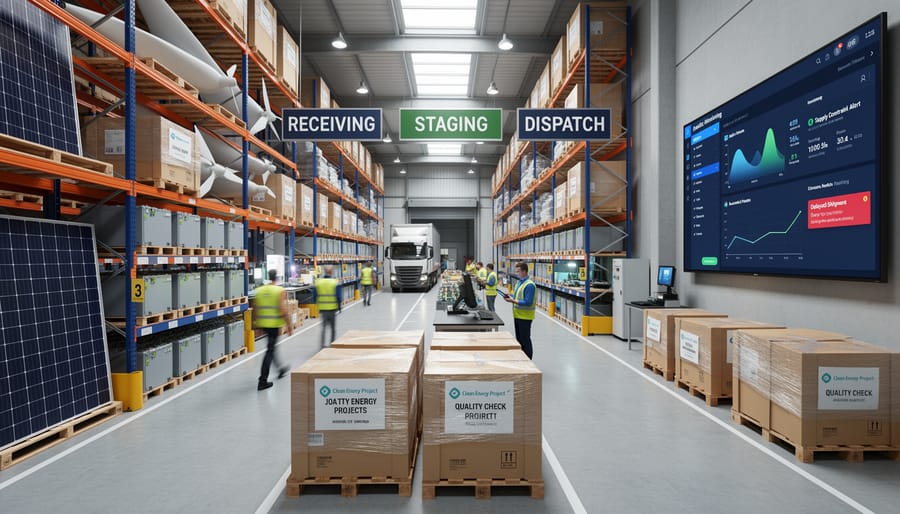
Step 1: Review Current Supply, Demand, and Investment Trends
Start by gathering baseline data from the IEA’s Global Critical Minerals Outlook 2026, released in July 2026, which maps current supply-demand dynamics across lithium, copper, nickel, cobalt, graphite, and rare earth elements. This report provides authoritative market snapshots you can use to benchmark your own exposure.
Pay close attention to price movements, but interpret them carefully. The 2024 outlook showed critical mineral prices fell across the board in 2023, a counterintuitive signal that doesn’t necessarily indicate adequate supply. Falling prices often reflect temporary oversupply or demand slowdowns rather than resolved structural constraints. Cross-reference price trends with production forecasts and new mine development timelines to distinguish short-term corrections from genuine capacity expansion.
Examine investment patterns in exploration, processing, and refining capacity. The 2026 outlook emphasizes that critical minerals now sit at the center of energy, economic, and national security strategies, which should translate into increased capital flows. Track where investment is concentrated geographically and which minerals are attracting the most funding. Gaps between investment levels and projected demand growth reveal where future bottlenecks will emerge.
Document supply chain concentration metrics for each mineral your operations depend on. The IEA has repeatedly flagged heavily concentrated supply chains as a primary risk factor. Note which countries dominate production and processing for your critical inputs, and calculate what percentage of global supply flows through single chokepoints. This concentration data forms the foundation for assessing your vulnerability to geopolitical disruptions or supply shocks.
Step 2: Assess the Implications for Your Specific Supply Chains
Start by mapping which critical minerals your operations depend on most heavily. Review your technology stack, solar panels, battery storage, inverters, charging infrastructure, and list the specific minerals each component requires. Lithium-ion batteries need lithium, nickel, cobalt, and graphite. Solar panels use copper extensively for wiring and electrical components. Wind turbines require rare earth elements for permanent magnets. Create a matrix showing your consumption volumes and projected needs for each mineral over the next three to five years.
Next, trace where these minerals originate in your supply chain. Contact your suppliers to identify the countries and specific mines producing your materials. The IEA’s 2026 outlook emphasizes that heavily concentrated supply chains pose significant constraints. Calculate what percentage of each critical mineral comes from a single country or region. If more than 50% of any mineral originates from one source, you’ve identified a concentration risk requiring immediate attention.
Identify single points of failure by asking: if one supplier, mine, or processing facility became unavailable tomorrow, could you maintain operations? Map dependencies beyond tier-one suppliers. Many solar companies source from distributors who rely on a handful of refineries. A disruption at one refinery could cascade through multiple supply chains simultaneously.
Quantify your exposure by estimating the financial and operational impact of each potential disruption. Calculate how many days of inventory you hold for each critical mineral, how long alternative sourcing would take, and what production delays would cost. This assessment reveals which vulnerabilities demand the strongest action.
Step 3: Develop Strategies to Strengthen Resilient and Diversified Supply
With your exposure mapped and vulnerabilities identified, the next priority is implementing practical measures to reduce concentration risks and secure reliable access to critical minerals. The IEA’s call for stronger action translates directly into sourcing decisions, contracting strategies, and collaborative approaches that build resilience without compromising project timelines or budgets.
- Diversify your supplier base across multiple countries and mining operations to avoid single points of failure in lithium, cobalt, or rare earth element procurement.
- Establish long-term supply agreements with producers in different regions, locking in capacity while spreading geopolitical risk across your portfolio.
- Invest in alternative material research and substitute technologies that reduce dependence on the most constrained minerals identified in the Global Critical Minerals Outlook.
- Monitor geopolitical developments in major producing nations, adjusting procurement strategies when concentration risks intensify in specific supply corridors.
- Participate in industry coalitions and solar supply expansion initiatives that pool purchasing power and create alternative supply channels outside dominant markets.
Beyond supplier relationships, consider vertical integration opportunities where feasible. Some solar manufacturers are acquiring stakes in mining operations or processing facilities to secure upstream capacity. While capital-intensive, this approach directly addresses the insufficient production capacity the IEA highlights as a long-term constraint. For smaller operations, joint procurement agreements with other clean energy companies can achieve similar risk reduction through collective bargaining power and shared supply commitments.
Verifying Your Risk Mitigation Effectiveness
Effective risk mitigation requires measurable proof that your diversification and resilience strategies are working. Start by establishing key performance indicators that track supplier concentration ratios, contract terms diversity, and inventory coverage for each critical mineral. Monitor the percentage of your lithium, copper, nickel, cobalt, graphite, and rare earth elements sourced from single countries or suppliers, if concentration levels aren’t declining quarter-over-quarter, your mitigation efforts need adjustment.
Stress-testing provides the clearest picture of actual resilience. Run scenario analyses that simulate supply disruptions from your top three source countries simultaneously, then measure how long your operations could continue. If you can’t maintain production for at least 90 days under a major disruption scenario, your buffer stocks and alternative supplier relationships need strengthening. Quarterly stress tests should incorporate price spike scenarios as well, the 2024 outlook’s finding that prices fell across the board in 2023 doesn’t eliminate the risk of sharp reversals when demand accelerates.
Build ongoing monitoring frameworks that combine automated alerts with manual reviews. Track the IEA’s periodic outlook updates for shifts in production forecasts and investment patterns. Audit supplier certifications semi-annually to verify claims and avoid greenwashing risks that could expose your organization to reputational damage. Compare your actual procurement costs against market benchmarks monthly, unexplained premiums often signal dependency vulnerabilities you’ve missed. Document these verification activities systematically; unverified mitigation efforts are indistinguishable from inaction when disruptions strike.
Next Steps and Ongoing Supply Chain Management
Supply chain resilience isn’t a one-time project. The IEA’s Global Critical Minerals Outlook series demonstrates this clearly: the 2024 edition highlighted falling prices across lithium, copper, nickel, cobalt, graphite and rare earth elements in 2023, while the 2026 report, released July 16, 2026, escalated the urgency, noting that critical minerals have moved to the forefront of energy, economic and national security agendas worldwide.
Set up quarterly reviews of your supply chain exposure using the framework you’ve built. Monitor the IEA’s publications and updates, particularly their annual outlook reports, to catch early signals of market shifts or emerging concentration risks. Track not just prices but production capacity expansions, new mining projects, and geopolitical developments affecting your key minerals.
Embed supply chain resilience into your strategic planning cycles. When evaluating new solar projects or technology upgrades, assess critical mineral requirements alongside traditional cost and performance metrics. Build supplier relationships that prioritize transparency about their upstream sourcing, and maintain ongoing dialogue about their own diversification efforts.
The IEA’s conclusion that stronger action is needed to ensure secure supply chains reflects a structural challenge, not a temporary disruption. Companies that treat critical mineral access as a core strategic concern, not a procurement afterthought, will be positioned to navigate constraints and capture opportunities as the clean energy transition accelerates. Regular reassessment keeps you ahead of risks that continue to evolve.
Frequently Asked Questions
Which critical minerals face the highest supply chain risks?
The IEA’s Global Critical Minerals Outlook identifies lithium, copper, nickel, cobalt, graphite, and rare earth elements as particularly vulnerable due to heavily concentrated supply chains and insufficient production capacity to meet anticipated future demand. These minerals are essential for solar panels, batteries, and other clean energy technologies.
How do concentrated supply chains affect solar energy projects?
Concentrated supply chains create single points of failure that can disrupt solar project timelines and increase costs. When production of critical minerals is dominated by a few suppliers or geographic regions, any disruption, whether from geopolitical tensions, natural disasters, or economic shifts, can ripple through the entire solar industry, delaying installations and driving up procurement expenses.
What actions does the IEA recommend for supply chain security?
The IEA’s 2026 outlook emphasizes that stronger action is needed to ensure secure supply chains as risks continue to grow. The agency stresses that secure and sustainable access to critical minerals is essential for smooth and affordable clean energy transitions, highlighting the need for diversification, strategic sourcing, and resilience-building measures.
How have critical mineral prices changed recently?
The 2024 outlook report found that global critical mineral prices fell across the board in 2023. However, this price decline creates a paradox: while it may seem to ease short-term cost pressures, it can discourage investment in new production capacity precisely when long-term demand is projected to surge, potentially worsening future supply constraints.
These questions reflect the concerns solar industry professionals raise most frequently when evaluating their exposure to critical mineral supply disruptions. The IEA’s positioning of critical minerals at the forefront of countries’ energy, economic, and national security agendas underscores why these issues matter beyond procurement departments. Understanding these dynamics helps decision-makers anticipate risks, justify diversification investments to stakeholders, and align supply chain strategies with the broader transition to clean energy that the IEA continues to monitor and assess.